The first commit
A multi-tenant SaaS from day one: Next.js on the front, a Node and TypeScript backend, PostgreSQL with strict tenant isolation, and OAuth to X, Instagram and Threads. Planner and poster agents wrote and published the posts.
Sociona · 2025–2026
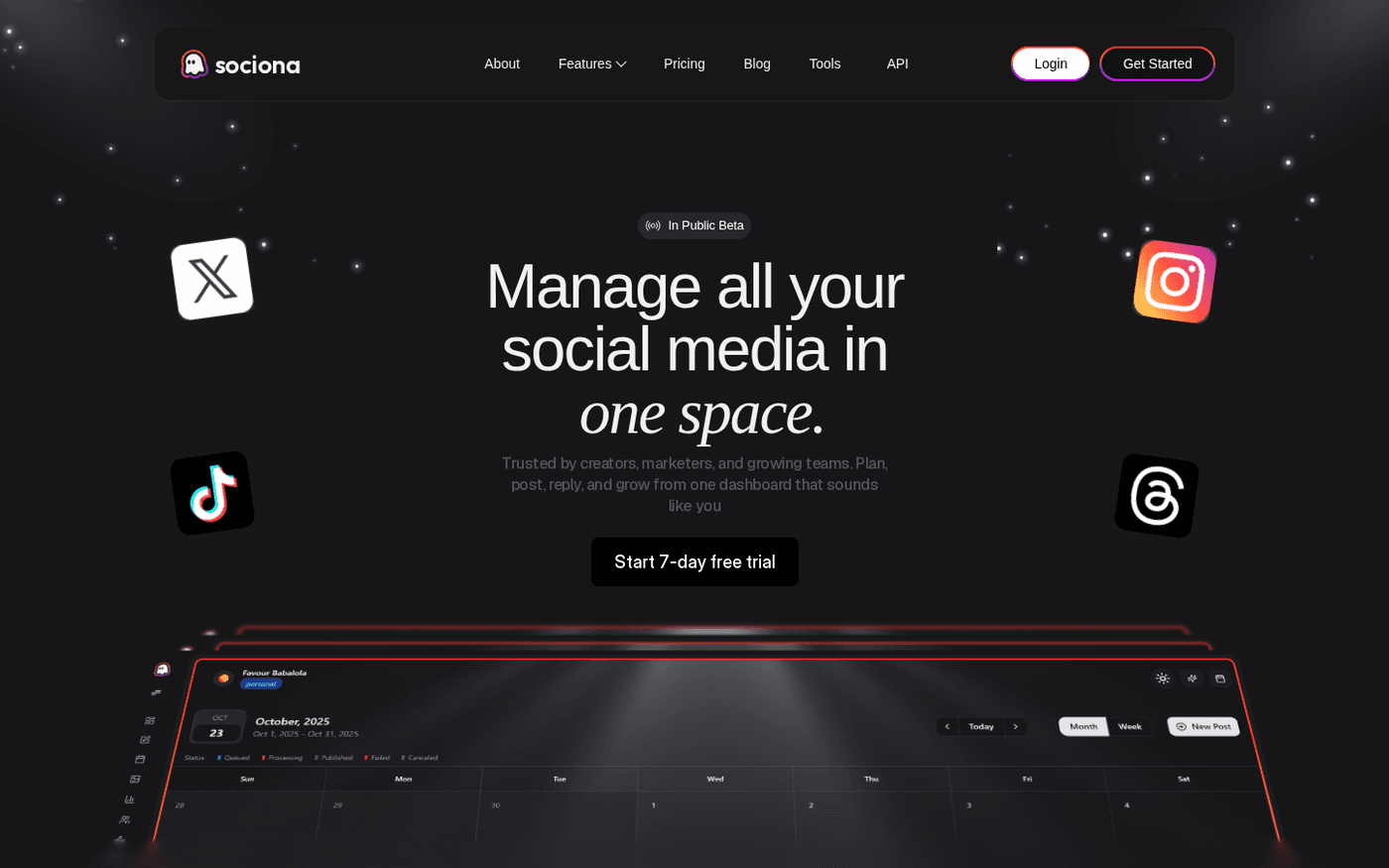
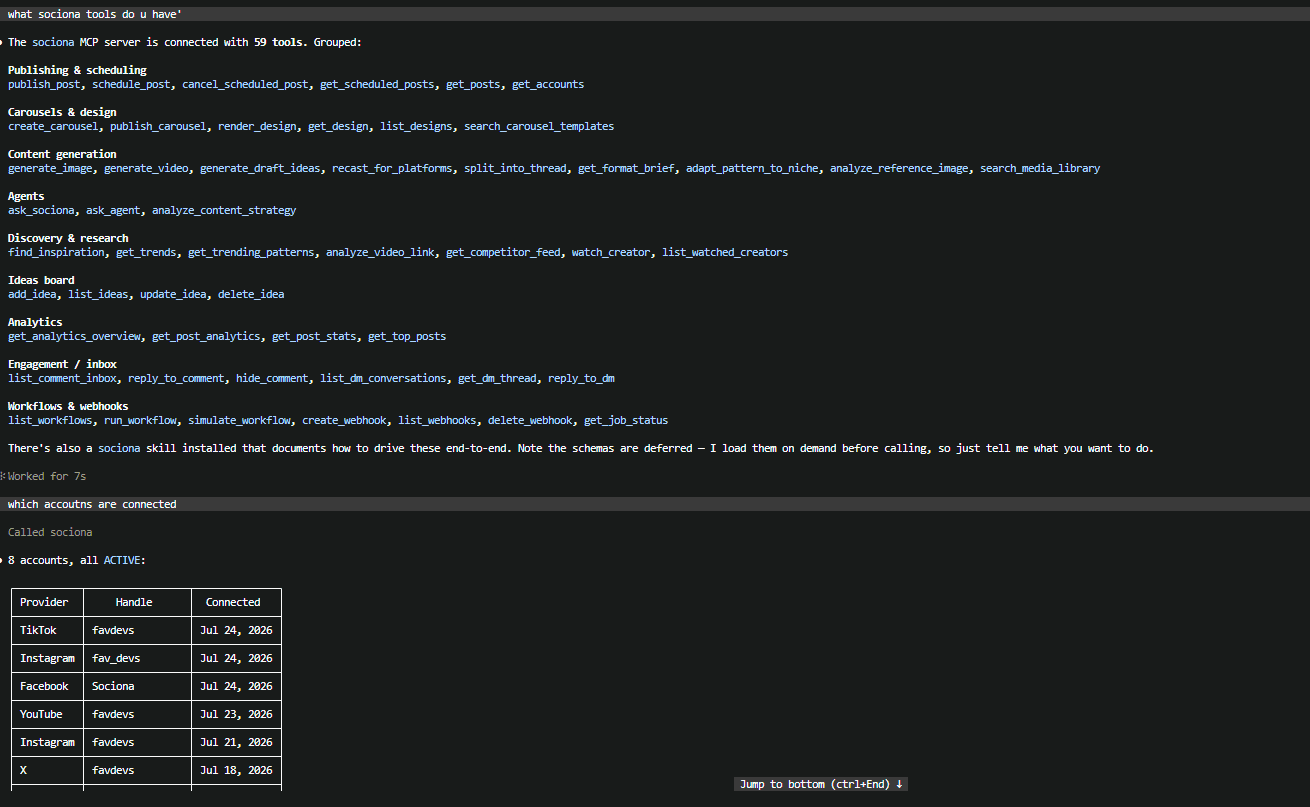
A social workspace for short-form video creators: plan ideas, develop them into scripts, design and schedule posts across X, Instagram, Threads, TikTok, YouTube, LinkedIn and Facebook, and learn from your own videos. An API and two MCP servers let agents run the same workflows. In public beta.
read how it was built ↓Short-form creators juggle a notes app for ideas, an editor, a design tool for carousels, a scheduler for each platform and a separate analytics page for each. AI assistants can draft a caption but cannot publish it or see what actually worked. Sociona is one workspace for the whole loop: plan, develop, design, publish and learn. The same API serves the dashboard and agents.
An idea goes on a board, gets developed into a script in the Creation Studio, then scheduled. Publishing is the end of the flow, not the start.
The dashboard and the agents call the same endpoints. Anything a person can do in the app, an agent can do through MCP, and the other way round.
Cortex measures a video with code (shots, pacing, beats) and lets models label the hooks and structure. The result is stored, so screens reuse it instead of spending tokens again.
Dry runs before publishing, platform and account limits, approval holds, idempotent publishing and scoped API keys. Power came after the guardrails.
The Studio server returns renders as images and ships its design playbook as instructions, so a session builds, looks and fixes in a loop.
Carousels, video analysis and renders run as queued jobs that survive restarts, and finish with a signed webhook instead of a held-open request.
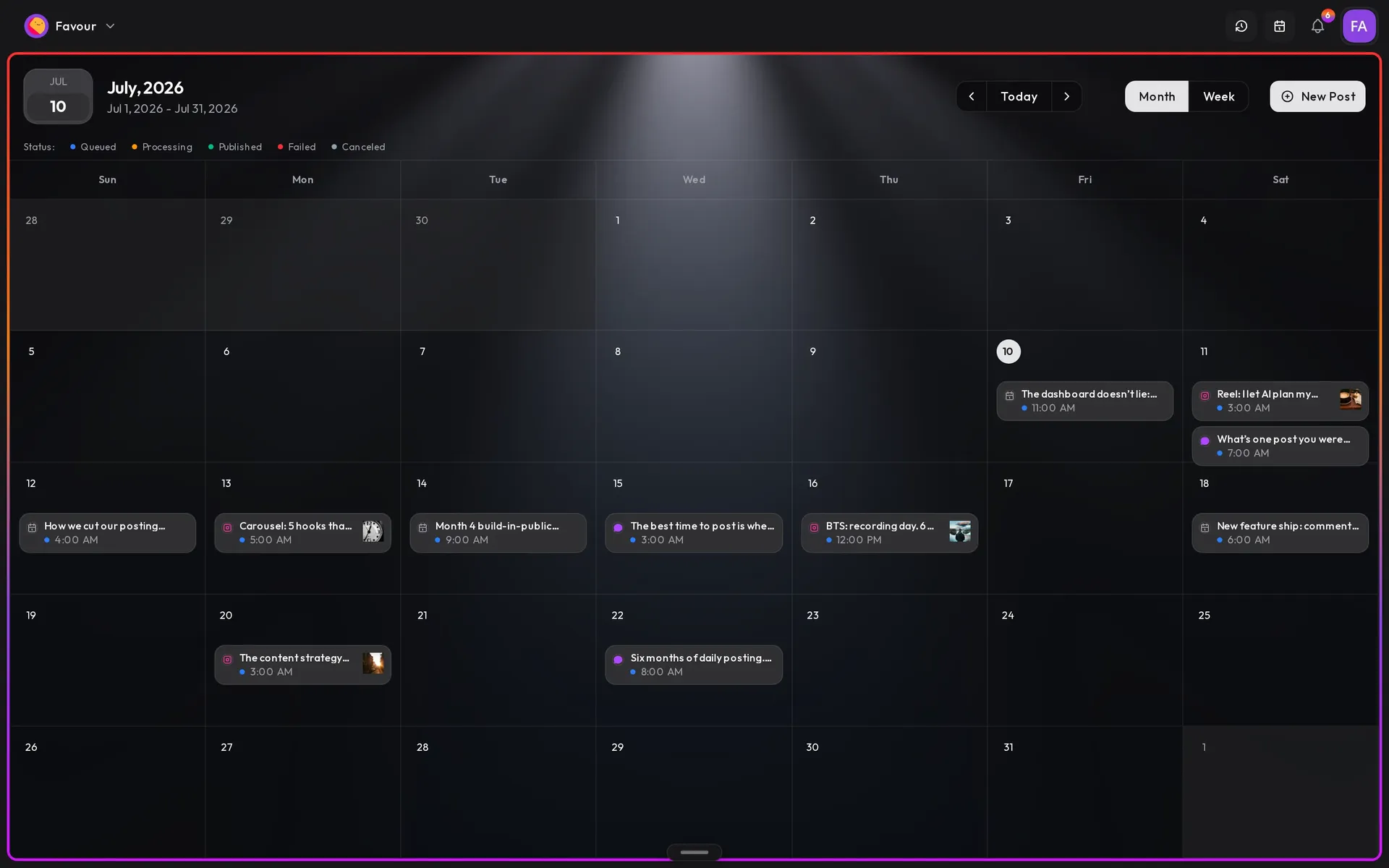
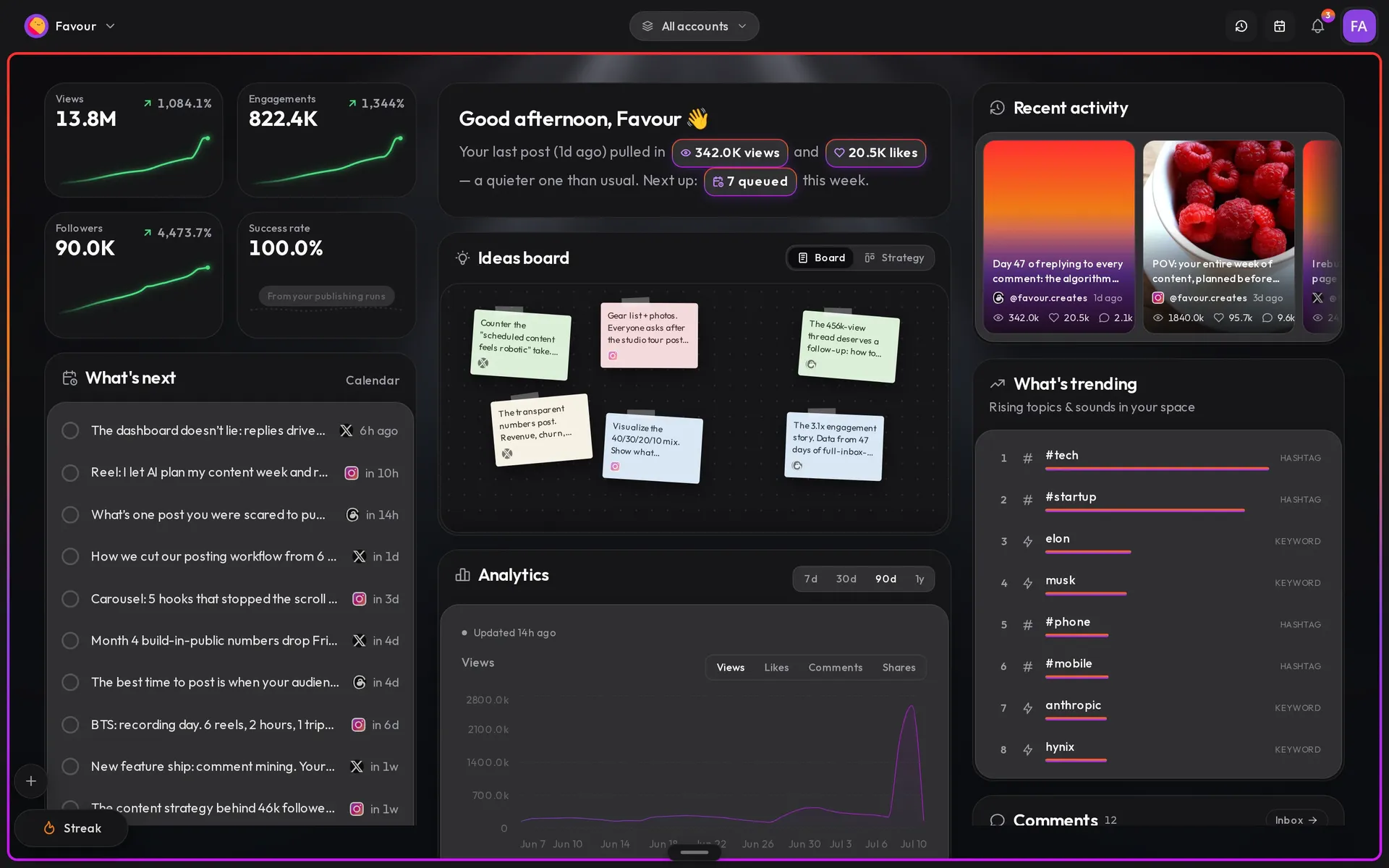
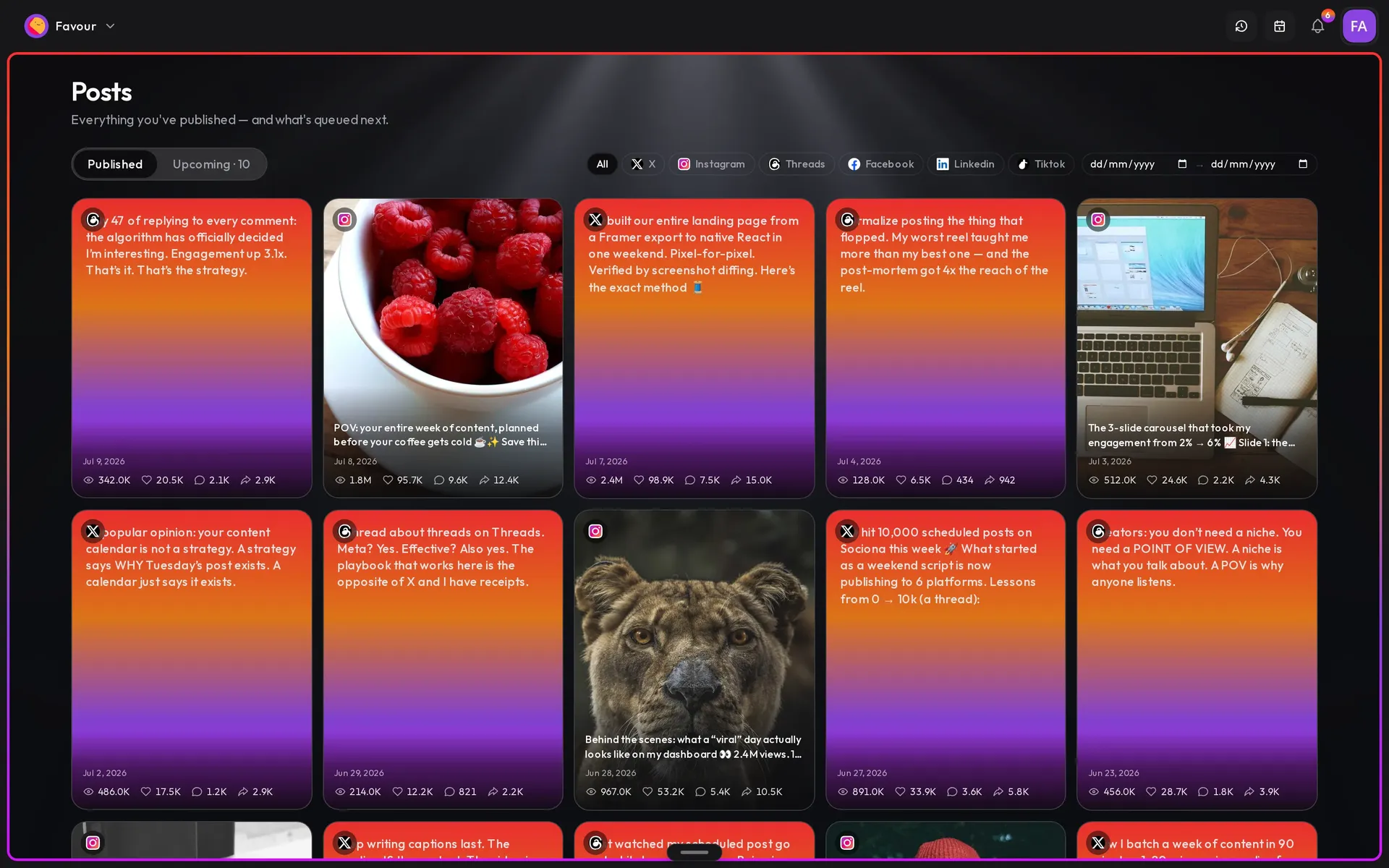
Schedulers such as Buffer and Hootsuite are built around a queue: you bring the copy, they time it. General chatbots write well but cannot post, and know nothing about your accounts. Analytics tools show you numbers without telling you what to do next.
Sociona is built around the creator's loop instead:
Posts can be dry-run and validated first, held for approval by profile guardrails, and published idempotently with a client request id so a retry never doubles a post.
Cortex keeps a rule: code measures, models label. Shot boundaries, pacing and beat times come from deterministic analysis, and the model only labels hooks and structure on top.
Moved to the Graph API and wrote the setup, test-user and mismatch fixes down as docs, so connecting an account is a checklist instead of a mystery.
Responses carry keepalives for multi-minute calls, and long tools can run as queue-backed jobs that survive restarts and finish with an HMAC-signed webhook, retried with backoff.
The Studio server returns each render as an image in the tool result, plus layout checks and an independent critique, so the model can look and fix before it calls the design done.
Rendered media goes into the library with absolute, durable links, and the API says which platform covers expire so a site knows to cache them.
Cross-posts are grouped into one entry, with a link, handle and numbers for each platform.
Sociona is in public beta with a hosted API, a mobile app and two MCP servers. These numbers describe what was built. There are no user figures to share yet.
In public beta with a 7-day free trial. Plan, develop, design, schedule and learn in one place, with MCP servers so agents can run the same workflows.
Public beta. The MCP server is open source.
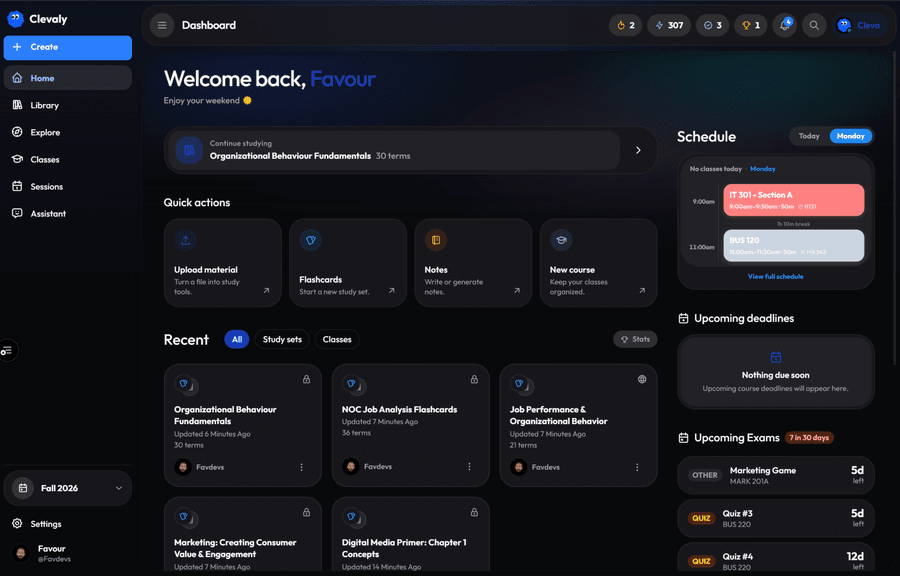
A school workspace that keeps classes, deadlines, notes and study sets in one place, with Cleva, an assistant that has already read your syllabus. Live in public beta on iPhone, web and Chrome.
Want something like Sociona?
Tell me what you're making and I'll tell you how I'd build it.