Lo-cal Inc. · 2025–2026

Lo-cal

closed source
  • Social
  • Local
  • Next.js
  • NestJS
local main
www.lo-cal.app
2025–2026

A local network for creators and small businesses in Edmonton. I led the engineering of the first version: customizable portfolio pages, local discovery, connections and messages, on a Next.js front end and a NestJS API.

read the case study ↓
about.txt
role
Lead Software Engineer
for
Lo-cal Inc.
stack
Social, Local, Next.js, NestJS
when
2025–2026

The brief

Creative professionals and small business owners juggle a professional network, a link page and a portfolio site, none of which help them be found by people nearby. Lo-cal combines a customizable portfolio with local discovery, so a good page leads to a coffee, a collaboration or a client in the same city.

facts.txt
Problem
Fragmented presence, poor local discovery
Audience
Creatives and small businesses in Edmonton
My role
Lead Software Engineer, Nov 2025 to Feb 2026
Co-founder
Oluwatobi Ogunleye, product
Surfaces
Web app, public portfolios, API
Timeline
Aug 2025 to Jan 2026 in this repo

How I approached it

  1. 01
    Own delivery end to end

    Architecture, API design and the user-facing web experience were mine, so a feature was one person's decision from database to page.

  2. 02
    Waitlist first

    A deployed marketing site with a waitlist came before the product, so there was something live and measurable early.

  3. 03
    Model the whole product up front

    Profiles, portfolio blocks, skills, connections and messages were designed as one schema, then built against it, with tests for each area.

  4. 04
    Move logic to a real backend

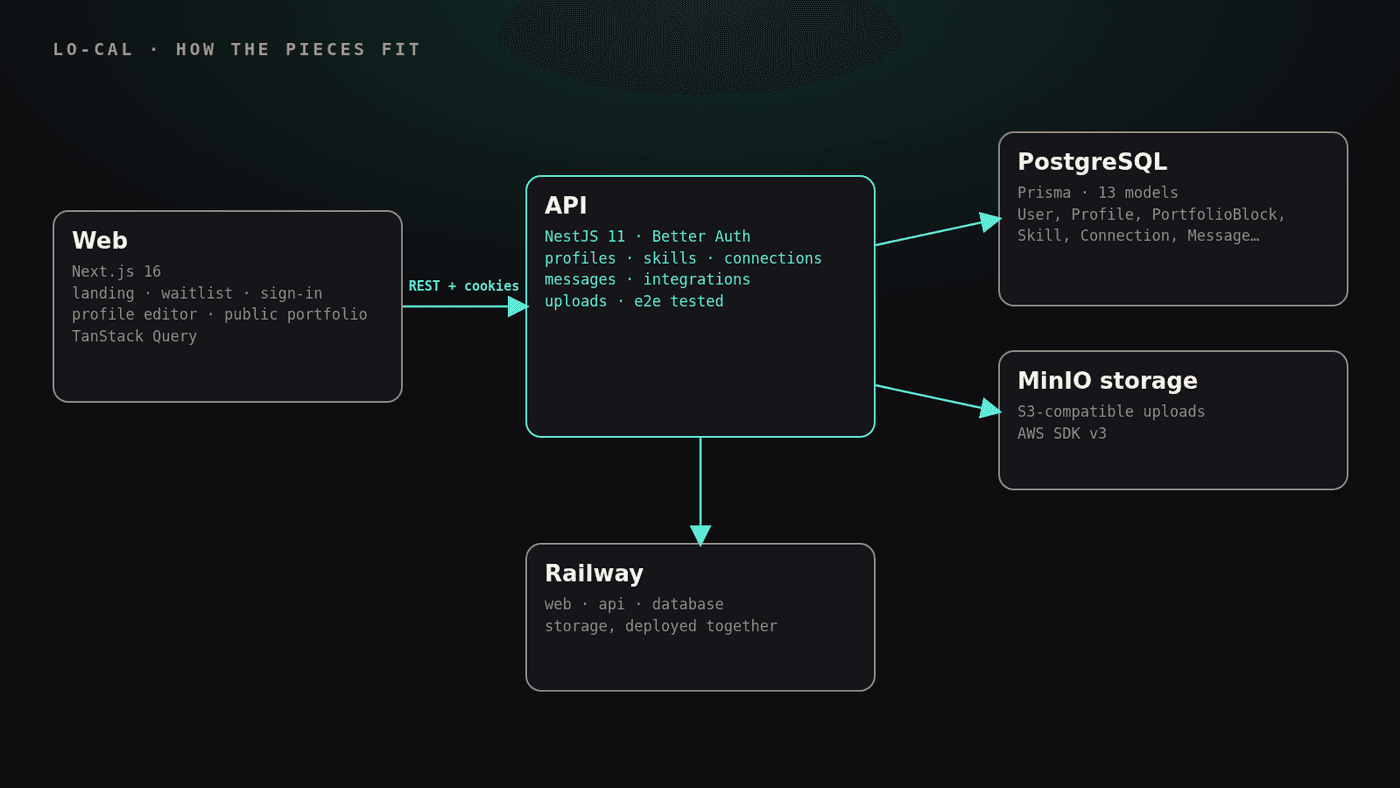
    Starting inside Next.js made the first weeks quick. Moving to NestJS made the API testable, deployable on its own and easier for two people to work in.

  5. 05
    Work in the open with the team

    Agile with Git branches, a changelog for every change and an issue tracker, so triage of user-reported defects stayed routine.

Lo-cal

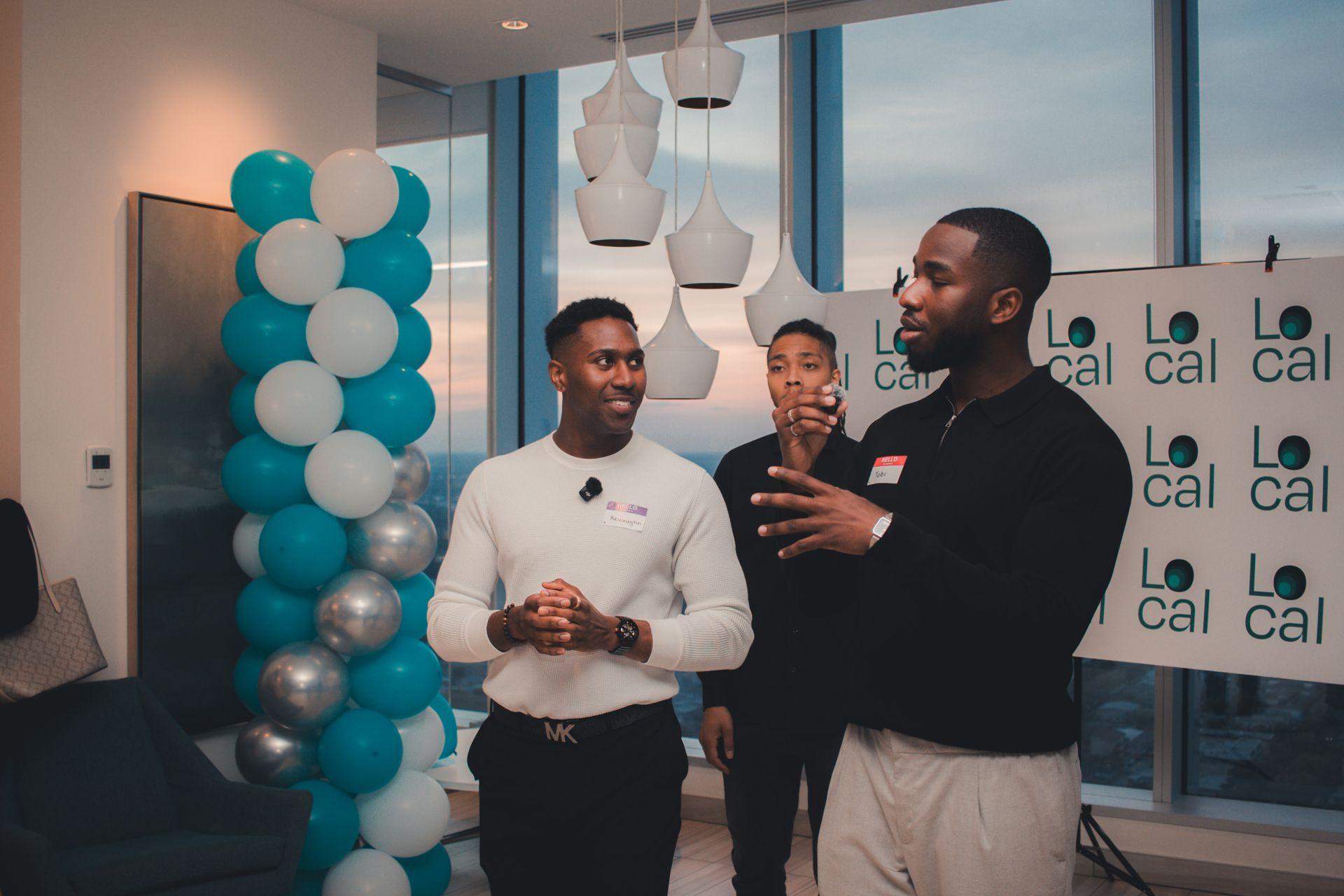
a Lo-cal event
a Lo-cal event
how the pieces fit
how the pieces fit

How it is different

Professional networks are built for hiring and are not local. Link-in-bio tools are simple and generic. Portfolio builders stop at the page. Lo-cal joins them around a place.

  • A portfolio you can shape, not a fixed profile.
  • Discovery that starts with the city, then skills and availability.
  • Connections and messages inside the same product, so interest turns into a conversation.
  • Built for one city first, so the community is dense enough to matter.

What it runs on

What got in the way

What came out of it

The first version of Lo-cal shipped as a waitlist site and a working MVP. These numbers describe what was built. There are no user figures on this page.

What I learned

  1. A waitlist before a product is a cheap way to find out whether anyone wants it.
  2. Put the API where it can be tested on its own. The move to NestJS paid for itself in confidence.
  3. Production is a different environment. Storage that worked locally broke on the host's private network.
  4. Write down what changed. A changelog entry per change made handing the work over straightforward.

Lo-cal: local discovery for creators

I led engineering on the first version, from waitlist to a full-stack MVP. The product has since moved on.

See Lo-cal

The live app is a feed-based beta with discovery and tickets.

up next →
The favdevs.me home page: a dotted desk with a flip clock, polaroid, sticky notes, a music player and the dock

This portfolio

2025–2026
closed source

Next.js · Payload CMS · GSAP

The site you are on. A portfolio built as a desk: cards you can drag around, a flip clock, sticky notes, a vinyl music player and a dock. Content comes from a Payload CMS, and the videos rail reads my posts straight from my own Sociona API.

say-hi.txt

Want something like Lo-cal?

Tell me what you're making and I'll tell you how I'd build it.

Overview