Personal · 2025–2026

This portfolio

closed source
  • Next.js
  • Payload CMS
  • GSAP
  • Design
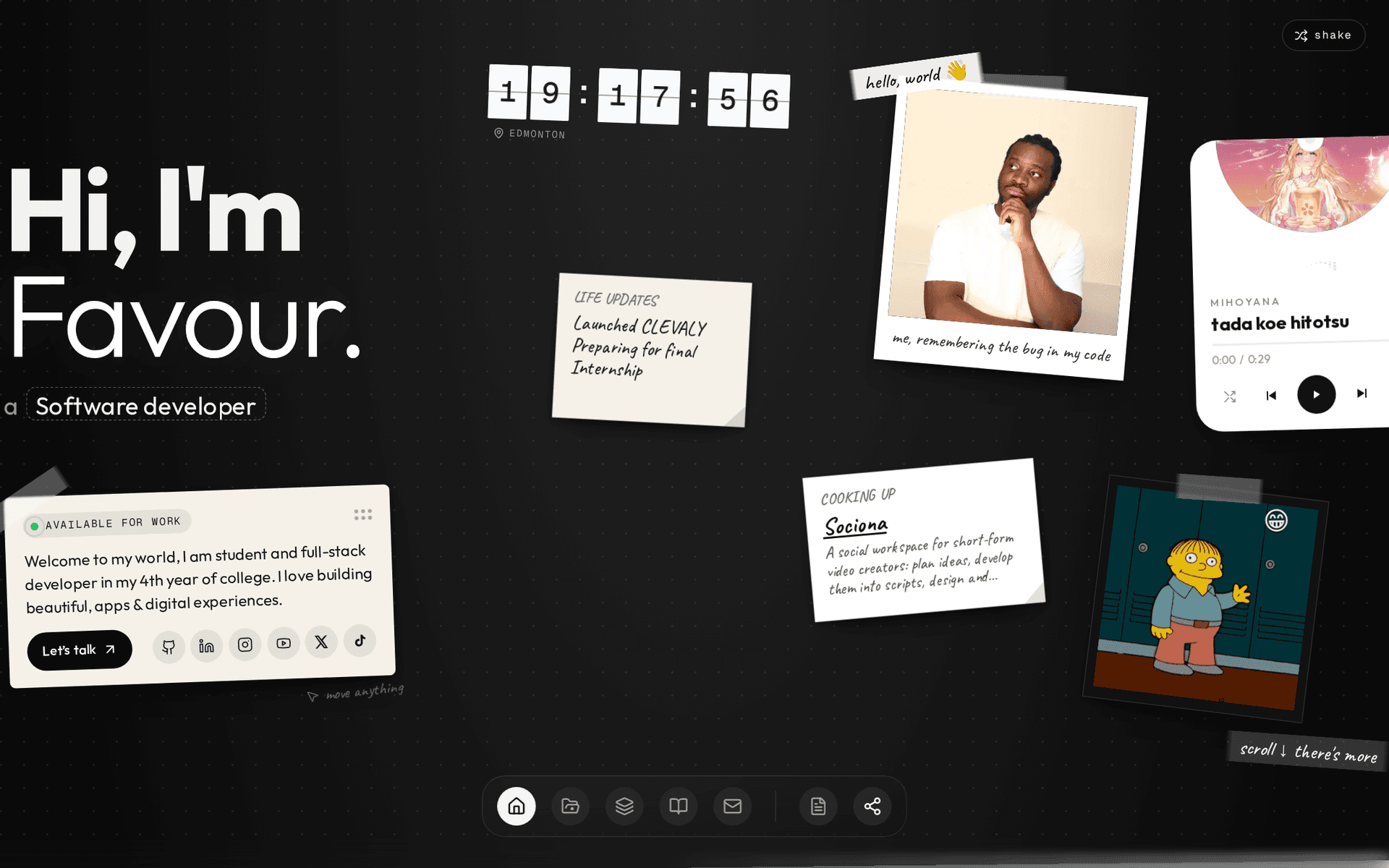
The favdevs.me home page: a dotted desk with a flip clock, polaroid, sticky notes, a music player and the dock
www.favdevs.me
2025–2026

The site you are on. A portfolio built as a desk: cards you can drag around, a flip clock, sticky notes, a vinyl music player and a dock. Content comes from a Payload CMS, and the videos rail reads my posts straight from my own Sociona API.

read the case study ↓
about.txt
role
Designer & Developer
for
Personal
stack
Next.js, Payload CMS, GSAP, Design
when
2025–2026

The brief

A developer portfolio is usually a page of cards. I wanted mine to feel like a place: personal, a bit playful, and clearly built by someone who cares about the details. It also had to work as a real portfolio, with proper case studies, a blog, a way to download my CV and no need to touch code to update anything.

facts.txt
Goal
A portfolio with personality and real content
Audience
Employers, collaborators and clients
Stack
Next.js 16, Payload CMS 3, PostgreSQL
Motion
GSAP and Motion
Role
Design and development
Timeline
Oct 2025 to now

How I approached it

  1. 01
    A metaphor people already know

    A desk with things on it needs no instructions. Pick up a card, tape a note, put on a record.

  2. 02
    Content in a CMS

    Payload holds projects, pages, posts, media and the layout of the home page, with drafts and on-demand revalidation, so publishing is fast and safe.

  3. 03
    Make it feel physical

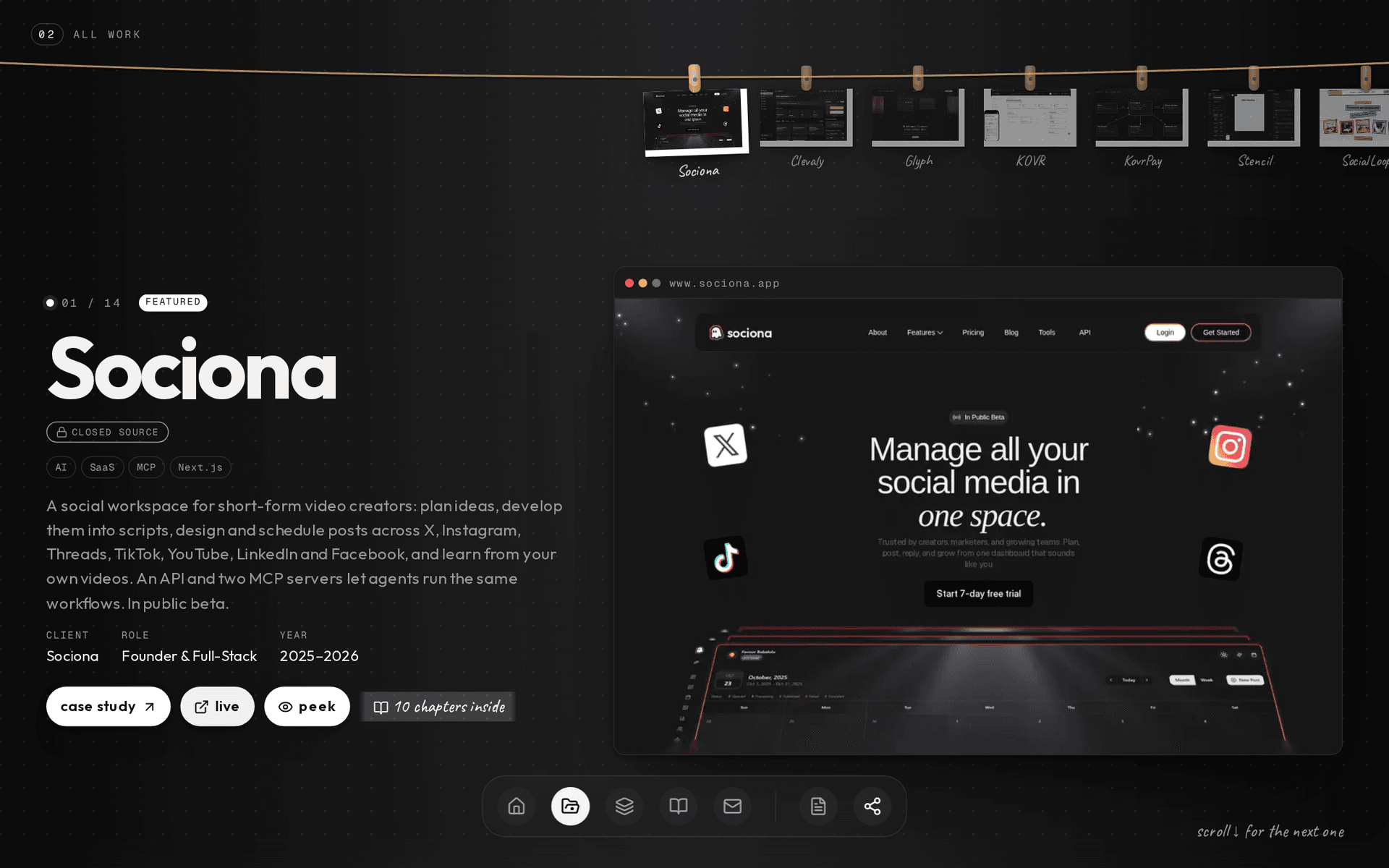
    Slight rotations, tape, paper shadows, a pegged clothesline for the work and a rope for the videos. Small details carry the whole idea.

  4. 04
    Scale instead of re-layout

    One designed stage, scaled to the viewport, keeps the composition intact. Phones get a clean flow layout instead.

  5. 05
    Use my own products

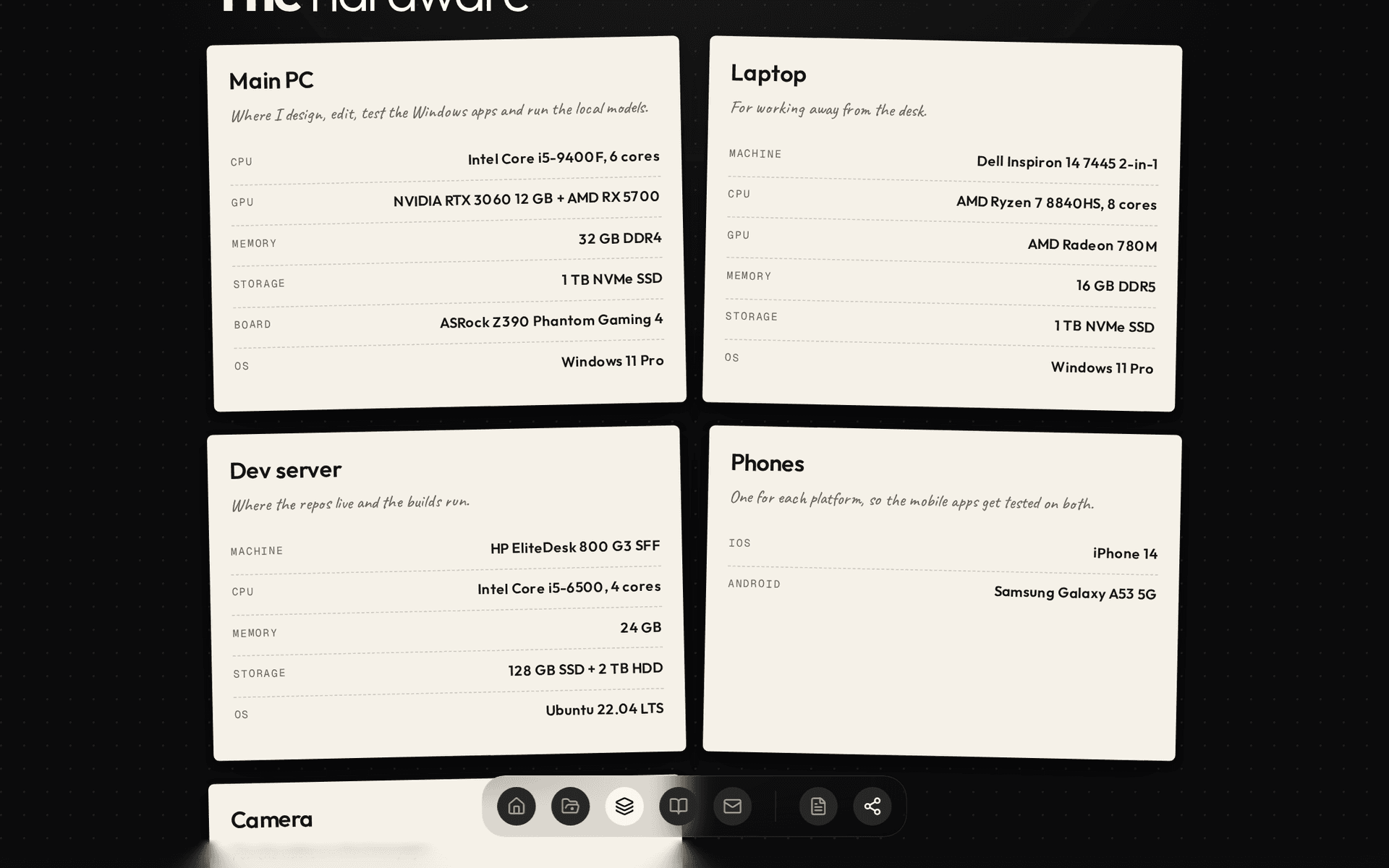
    The videos come from Sociona, the case studies come from the repos I built, and the stack page lists the machines I actually use.

A look at the site

the desk
the desk
projects
projects
stack
stack
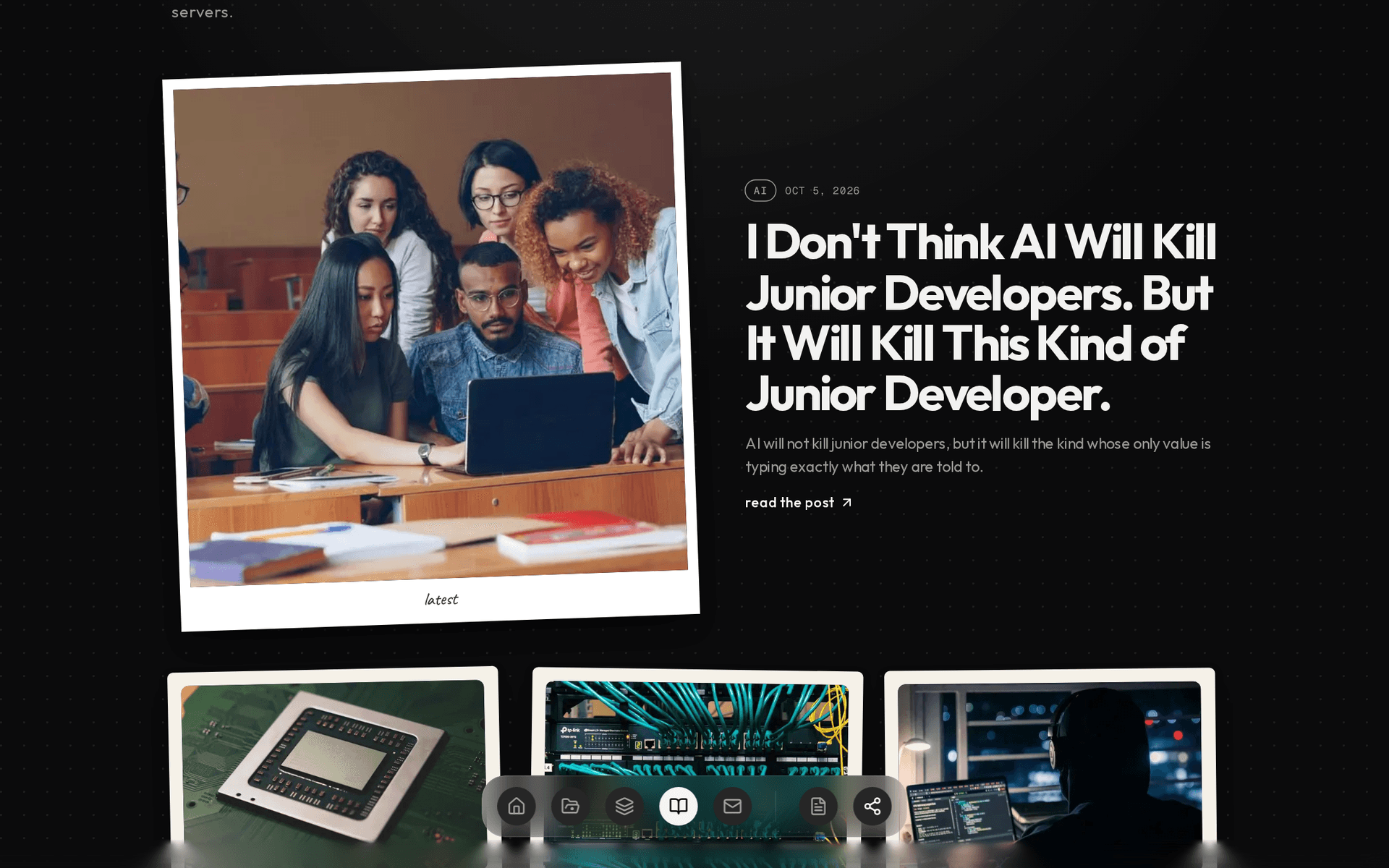
journal
journal
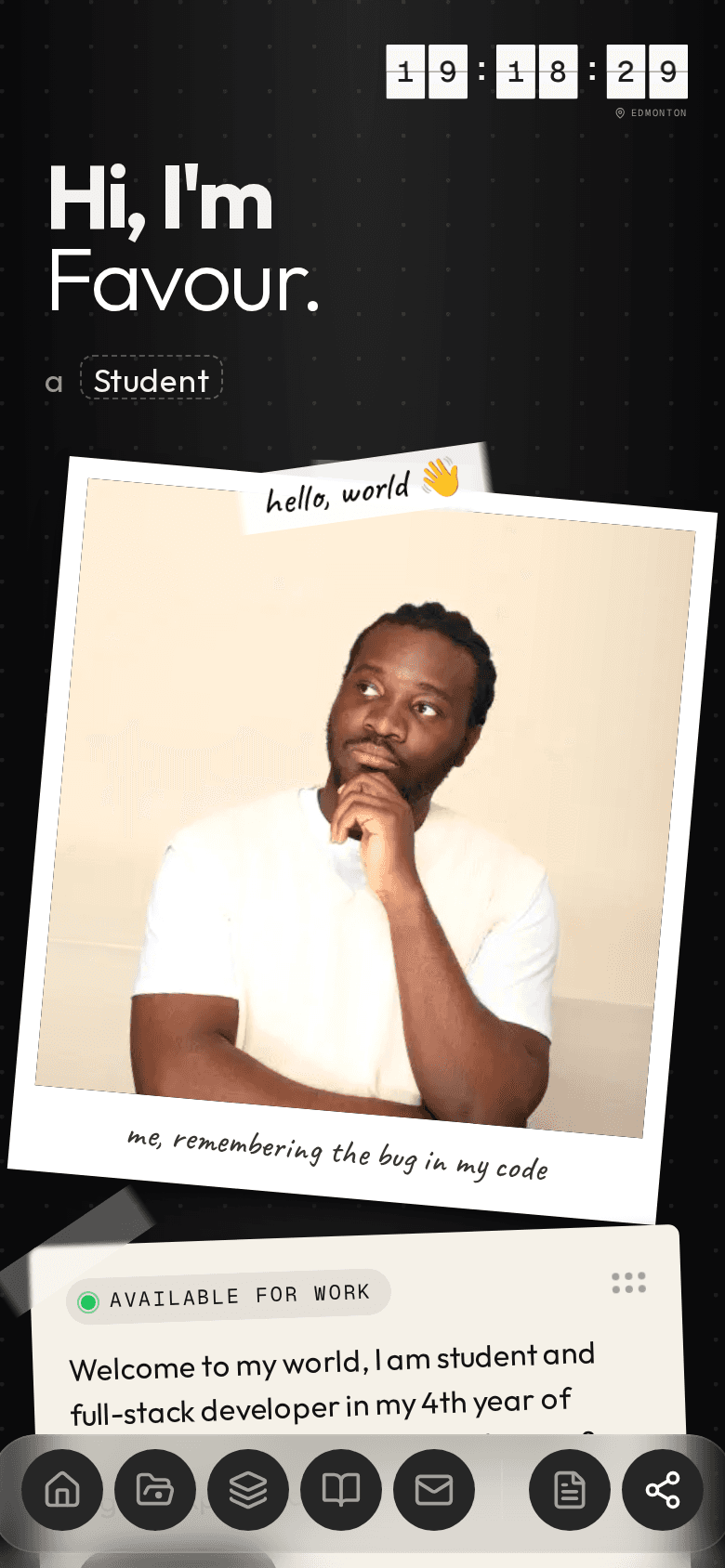
on a phone
on a phone

How it is different

Template portfolios share one shape: a hero, a grid of projects and a contact form. This one trades neatness for character, without giving up the parts a hiring manager needs.

  • The interface is part of the portfolio. It shows craft before you read a word.
  • Every project has a proper write-up, with the problem, the build and the lessons.
  • It is alive: a clock, music, my latest videos and my GitHub activity.
  • It is easy to change. New projects, copy and colours are edits in a CMS.

What it runs on

What got in the way

What came out of it

The site is live and is how I present my work. These numbers describe what was built.

What I learned

  1. Personality needs a framework. A strong metaphor made hundreds of small choices easy.
  2. Scale a composition, do not rebuild it. One designed stage beat a stack of breakpoints.
  3. Let the browser do the work. Native sticky and CSS beat clever scroll code every time.
  4. Write the content once, in the right place. A CMS and scripts turned a month of typing into an afternoon.

This portfolio: a desk you can rearrange

The site you are looking at. Next.js and Payload CMS, with live content from my own products.

Have a look around

Drag a card, change the music, or open a project.

up next →
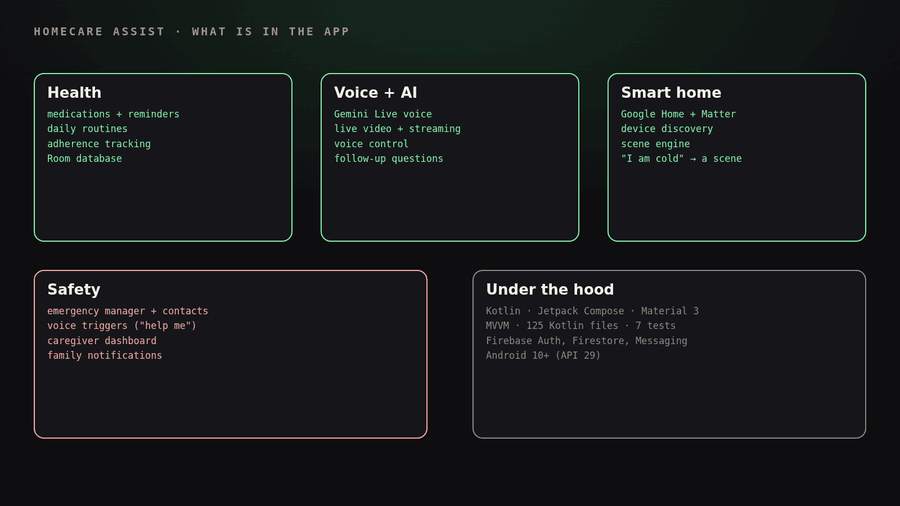
HomeCare Assist: health, voice and AI, smart home, safety, and the technology underneath

Home-Edge

2025
open source

Android · Kotlin · Health

HomeCare Assist: an Android app for elderly independence. Medication and routine tracking, a Gemini Live voice assistant, Google Home scenes you can trigger by saying "I'm cold", an emergency system and a caregiver dashboard, written in Kotlin and Jetpack Compose.

say-hi.txt

Want something like This portfolio?

Tell me what you're making and I'll tell you how I'd build it.

Overview